Designing for Field-of-View

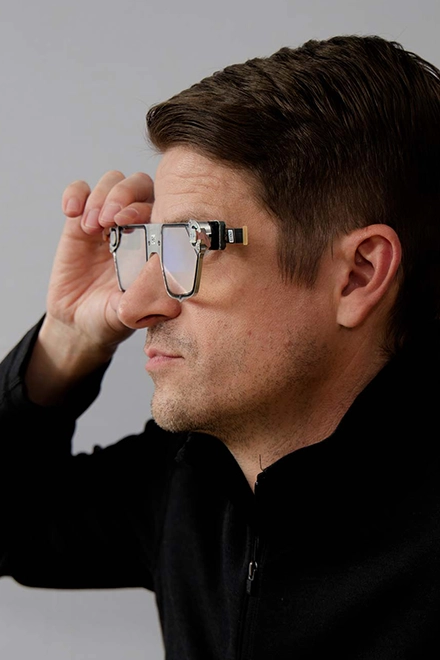
Field-of-view (FOV) informs how digital content appears, feels, and fits into daily life. We select FOV based on use-case for optimal user comfort and device performance.
-only-degrees-displayed-1320x1320-72dpi-wo-leg.jpg)
Vision Defined
Understanding Field-of-View
Effective FOV design respects comfort, natural eye movement, and the role each device plays in daily life. Central and peripheral vision serve different purposes in cognition and perception. Glanceable displays may only need a narrow view, while immersive experiences call for broader FOV.
Peripheral vs. Central
Glanceable Displays
Expanded Awareness
Fit by Use Case
Design Integrity
FOV is More Than a Spec
Field-of-view is a design challenge that spans optics, ergonomics, software, and user behavior. We approach it holistically, with teams working together from concept to testing. When FOV is designed with intention, the result is a device that feels intuitive and responsive.
Experience Above All
Cross-Functional Thinking
Tested in the Physical World
Optimized for the User
Binocular Coordination
Natural Eye Movement

Key Learnings
Experience Shapes Expertise
Years of working at the cutting edge of optical performance has given our teams deep insight into what matters most: comfort, clarity, and human fit. That experience carries forward as we design smaller, lighter devices with purpose-fit FOVs. Scaling down requires just as much care as scaling up, because when everything is miniaturized, precision becomes non-negotiable.
Large FOV Learnings
Smarter Miniaturization
Designing for Comfort
Optics That Adapt
Informed Choice
Selecting the Correct FOV

The optimal field-of-view depends on what the user needs to see, how they interact with content, and how the device fits into their day. Our decisions are guided by vision science, population data, optical modeling, and dynamic FOV simulations, combined with partner goals and real-world use cases. Bigger isn’t always better. The best FOV is the one that supports the experience without distraction.
Vision Science Matters
Built Around Use Cases
Collaboration Drives Fit
Optimized, Not Maximized