Reference Designs

Developing augmented reality (AR) glasses requires hundreds of interconnected decisions. Reference designs provide established architectures that help partners evaluate concepts, understand design implications, and make more informed decisions before committing to custom hardware.

Foundation
Accelerating Early Decisions
Reference designs provide a practical starting point for AR development by combining proven architectures, technical expertise, and lessons learned from years of product development.
Proven Architectures
Partners can build upon established optical, mechanical, and system-level approaches rather than starting from a blank sheet of paper.
Reduced Uncertainty
Early access to established design foundations helps identify constraints, opportunities, and technical considerations before major investments are made.
Practical Guidance
Development decisions are informed by real-world engineering experience gained through years of AR hardware design and testing.
Faster Alignment
Technical and business stakeholders can establish shared priorities before detailed development begins.
Exploration
Evaluating Key Priorities
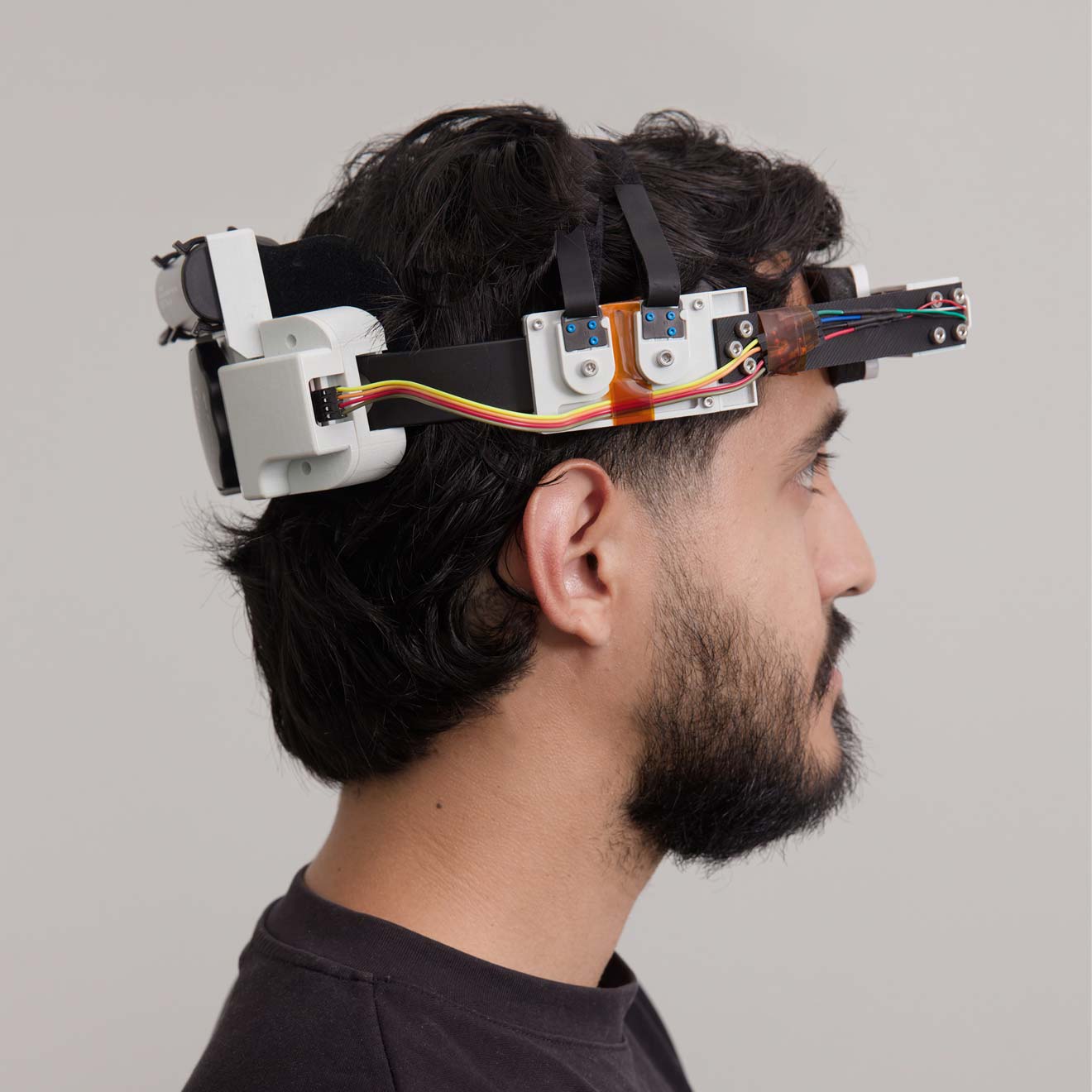
Every AR device requires balancing competing priorities. Development experience and established architectures provide a framework for evaluating design choices before they become costly engineering challenges.
Optical Performance
Partners gain insight into how display technologies, waveguides, and visual requirements influence the overall device architecture.
Wearability Goals
Comfort, weight distribution, and ergonomics can be evaluated early, helping teams align technical requirements with user expectations.
System Integration
Partners can explore how sensing, compute, power, and software requirements interact across the complete device.
Manufacturing Considerations
Design decisions can be evaluated with assembly, production, and long-term manufacturing objectives in mind.

Direction
Refining Product Concepts
Broad ideas can be transformed into actionable development paths through greater clarity around requirements, priorities, and implementation approaches.
Use Case Definition
Product goals can be translated into technical requirements, creating a clearer path from concept to implementation.
Technical Priorities
Teams can identify which features and performance targets will have the greatest influence on system architecture.
Design Evaluation
Alternative approaches can be explored using established development frameworks before significant engineering resources are committed.
Development Planning
Partners gain a clearer understanding of potential development paths, dependencies, and implementation considerations.
Acceleration
Enabling Future Development

Reference designs accelerate subsequent prototyping, validation, and manufacturing activities while reducing unnecessary redesign cycles.
Prototype Readiness
Existing design foundations can accelerate prototype development while helping teams validate key design decisions earlier.
Cross-Team Alignment
Engineering, design, manufacturing, and business stakeholders can work from a shared understanding of product objectives.
Reduced Rework
Potential challenges can be identified earlier, when design changes are less disruptive to implement.
Development Continuity
A structured development framework helps connect concept exploration, prototyping, and production planning into a more streamlined process.

